
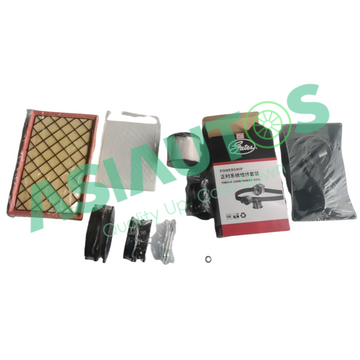
When it comes to maintaining and repairing the MAXUS/LDV Deliver9, the newly released 9-piece service kit is undoubtedly a valuable aid for owners. This meticulously designed repair kit includes nine key components, ensuring stable operation and long-term use. Below is a detailed description of the kit:
Belt Timing Kit
Function: The timing belt kit is a critical component of the engine's valvetrain. It precisely controls the timing of valve opening and closing and the synchronization of piston movement, ensuring the four strokes of the engine—intake, compression, power, and exhaust—operate in the correct sequence and timing, guaranteeing proper engine operation and power output.
Structure and Material: The timing belt is typically made of high-strength rubber with embedded reinforcements such as fiberglass or aramid fiber to enhance its strength and wear resistance. The kit also includes components such as the tensioner and idler pulley, which are typically made of high-quality metal and precision-machined to ensure stable support and tension on the timing belt during engine operation.
Rear Brake Pad
Function: The rear brake pad is a vital component of the vehicle's braking system. When the driver depresses the brake pedal, the brake caliper presses the rear brake pad firmly against the brake disc, slowing the wheel to a stop through friction, thereby achieving the vehicle's braking function.
Material and Characteristics: Rear brake pads are typically made of a variety of materials, including semi-metallic, ceramic, and organic. Semi-metallic brake pads offer a high coefficient of friction, excellent braking performance, and a relatively low price. Ceramic brake pads offer advantages such as low noise, low dust, and high-temperature resistance, as well as more stable braking performance. Organic brake pads prioritize comfort and environmental friendliness, with a moderate coefficient of friction and minimal wear on the brake disc.
Front Brake Pad Assembly
Function: The front brake assembly, which includes not only the front brake pads but also the brake calipers, brake discs, and other components, is responsible for the vehicle's primary braking function. During braking, the front brake assembly typically generates greater braking force than the rear brakes, playing a key role in the vehicle's braking performance and stability.
Operating Principle: When the brake pedal is depressed, brake fluid flows through the brake calipers, pushing the pistons to press the front brake pads against the brake discs, generating friction that decelerates the front wheels. The braking performance of the front brake assembly depends on factors such as the friction between the brake pads and discs, the piston pressure in the brake calipers, and the heat dissipation of the discs.

Front Brake Pad Assembly
Function: The front brake assembly includes not only the front brake pads, but also the brake calipers, brake discs, and other components. It is responsible for the vehicle's primary braking function. During braking, the front brake assembly typically generates greater braking force than the rear brakes, playing a key role in the vehicle's braking performance and stability.
Operating Principle: When the brake pedal is depressed, brake fluid flows through the brake calipers, pushing the pistons to press the front brake pads firmly against the brake discs, generating friction to decelerate the front wheels. The braking performance of the front brake assembly depends on factors such as the friction between the brake pads and discs, the piston pressure of the brake calipers, and the heat dissipation performance of the discs.
Front Air Conditioning Filter
Function: The front air conditioning filter primarily filters the air entering the vehicle cabin, effectively removing harmful substances such as dust, pollen, smoke, bacteria, and viruses. This provides a clean, healthy air environment for passengers, reduces the risk of respiratory illnesses, and improves vehicle comfort.
Filtration Principle: Cabin filters typically utilize multiple layers of filter materials, such as activated carbon, non-woven fabric, and glass fiber. These materials physically filter and adsorb various impurities and harmful gases from the air, ensuring fresher air entering the vehicle.
Oil Filter Assembly
Function: The oil filter assembly's primary function is to filter harmful substances such as metal debris, sludge, and impurities from the engine oil during engine operation, maintaining oil cleanliness and extending its service life. This ensures that the oil can smoothly lubricate and dissipate heat to various engine components, reducing friction between components and protecting critical engine components.
Structure and Operation: The oil filter assembly typically consists of a housing, filter element, and bypass valve. After being pumped from the engine oil sump by the oil pump, the oil passes through the oil filter element for filtration. The clean, filtered oil then enters the engine components for lubrication and heat dissipation. When the filter element is clogged, the bypass valve will automatically open, allowing unfiltered oil to enter the engine directly to ensure the normal operation of the engine, but at this time the oil filter should be replaced as soon as possible.

Fuel Filter Element Components
Function: The fuel filter element assembly filters impurities, moisture, colloids, and other harmful substances from the fuel, preventing them from entering the fuel system. This prevents problems such as injector clogging and fuel pump wear, ensuring fuel purity and enabling complete combustion within the engine. This improves engine performance and reliability, while reducing pollutant emissions.
Operating Principle: Fuel filters typically use multiple layers of filter material, such as filter paper, activated carbon, and metal mesh, to filter the fuel in a progressive manner. After the fuel enters the filter from the inlet, it passes through the filter element, trapping impurities within the element. Clean fuel then flows out of the outlet and into the engine's fuel system.
Oil Pan Gasket
Function: The oil pan gasket is located between the engine oil pan and the engine block. Its primary function is to prevent oil leaks, ensuring the oil in the oil pan circulates properly within the closed environment, and maintaining the proper functioning of the engine's lubrication and cooling systems.
Materials and Characteristics: Oil pan gaskets are typically made of rubber, silicone, or metal. Rubber gaskets offer excellent flexibility and sealing properties, adapting to engine vibration and deformation under various operating conditions. Silicone gaskets offer greater heat and corrosion resistance, making them suitable for high-performance engines. Metal gaskets offer greater strength and sealing properties, making them commonly used in large diesel engines.
Glow Plug
Function: Glow plugs are primarily used in diesel engines. Before the engine starts, they energize and heat the air in the combustion chamber, making it easier for the diesel to ignite, thereby improving the engine's starting performance in low-temperature environments. Glow plugs are particularly important in cold winter weather.
Operating Principle: When the driver turns on the ignition, the glow plug's control circuit is energized. Current flows through the glow plug's resistor, heating the resistor, which then transfers heat to the surrounding air. After a period of preheating, the engine's air temperature rises. When the engine is started, the diesel injected into the combustion chamber quickly mixes with the hot air and ignites, ensuring a smooth engine start.
Understanding the functions, structures, and maintenance of these auto parts will help car owners better maintain their vehicles, ensuring performance and safety, and extending their service life. When replacing parts, choose reliable, original, or reputable brands to ensure proper performance and compatibility.
|
Product Content
|
QTY |
Product replacement cycle
|
|
Belt Timing Kit
|
1 set |
It needs to be replaced about 40,000 to 50,000 km
|
|
Rear brake pad
|
4pcs |
It needs to be replaced about 30,000 to 50,000 km
|
|
Front Brake Pad Assembly
|
4pcs |
It needs to be replaced about 30,000 to 50,000 km
|
|
Front Air Conditioning Filter
|
1 pc |
It needs to be replaced about every 100,000 kilometers or once a year.
|
|
Air Filter
|
1 pc |
It needs to be replaced about every 100,000 kilometers or once a year.
|
|
Oil Filter Assembly
|
1 pc |
It needs to be replaced about every 100,000 kilometers or once a year.
|
|
Fuel Filter Element Components
|
1 pc |
It needs to be replaced about 30,000 kilometers or once a year
|
|
Oil pan seal
|
1 pc |
It needs to be replaced about 50,000 km
|
|
Glow plug
|
1 pc |
It needs to be replaced about 30,000 km
|
Your reliable supply partner for MAXUS/LDV Deliver9 (V90 ) auto parts


